



While the news remains deeply alarming, our sister organisation, SOS Children’s Villages Nepal, is launching its first initiatives aimed at children and families affected by the disaster. In coordination with the local authorities, it is putting in place an integrated response focused on child protection and psychosocial support, access to essential services for affected families, education, and the early recovery of communities.
A project is being launched this September to support 5,980 direct beneficiaries. Around forty unaccompanied children are expected to receive temporary alternative care in the near future, and two child-friendly spaces will open their doors. SOS Villages d’Enfants Monde is appealing for solidarity from Luxembourg.
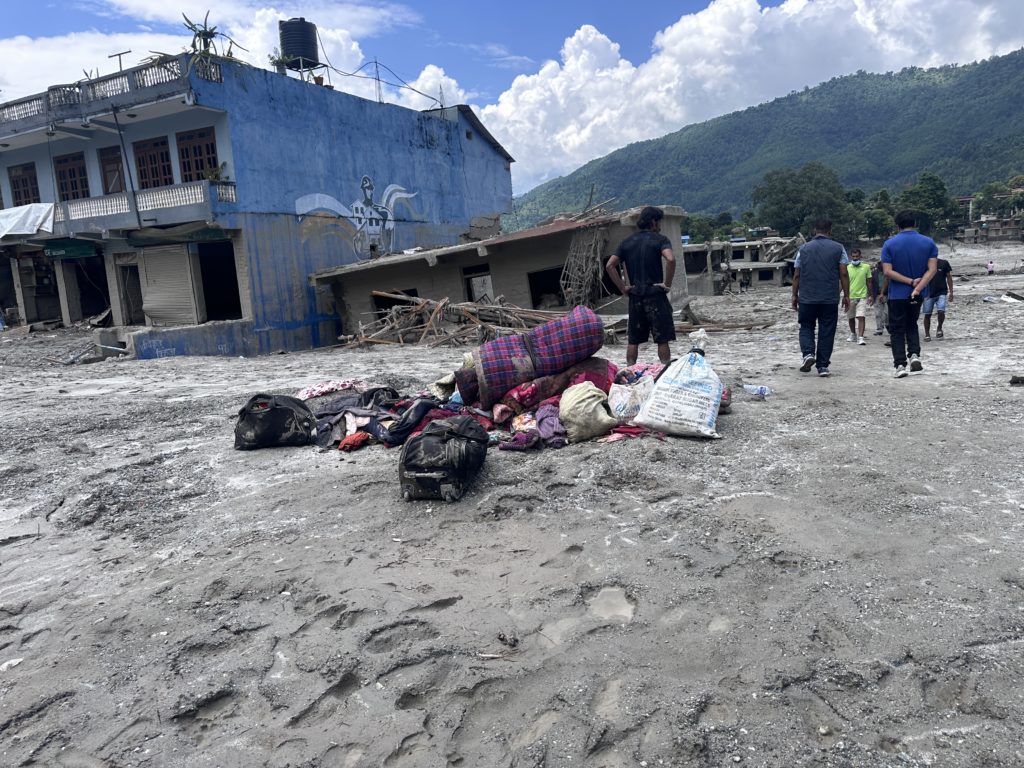
More than a week after the devastating floods that ravaged Nepal and Tibet, the human toll continues to rise tragically. The death toll now stands at 1,280, with more than 5,600 people reported missing (Thursday evening, 3 September). The damage caused by torrents of ice, rocks and mud is immense.
In Nepal, an estimated 1.6 million people have been affected by the disaster, and fifteen municipalities have declared a state of emergency in response to the flooding. Entire villages have been swept away, dozens of roads and bridges have collapsed, thousands of buildings and homes have been destroyed, and essential infrastructure, including six health facilities and nineteen schools, has been destroyed or severely damaged, preventing children from accessing basic services.
New threats emerging
Rescue teams are working in extreme conditions in remote areas, while monsoon rains continue to worsen the situation. Time is running out to find survivors as the country is already burying its dead, some of whom have yet to be identified. The situation is all the more dangerous as rising water levels pose the threat of further disasters. A landslide has led to the formation of a new landslide-dammed lake in Tibet, resulting in increased water levels in the Bhote Koshi River, which flows through Nepal’s Rasuwa District.
Children are at risk and families need everything
Humanitarian organisations estimate that 65,000 people require emergency assistance in the areas of water, hygiene and sanitation, and that more than 22,000 children are in need of protection and humanitarian aid (including 2,600 children under the age of five who urgently require treatment for severe acute malnutrition). The trauma is profound and families have lost everything. Many have been displaced and are being accommodated by host families or relatives. Access to safe drinking water is difficult, or in some cases non-existent; water sources are contaminated, emergency shelters are overcrowded, and health risks are significant. Children are at risk. More than one hundred children are believed to have been separated from their parents or guardians as a result of the disaster.
Initial measures
Present in Nepal for 54 years, the local SOS organisation supports thousands of children, young people and adults across seven provinces of the country, including Bagmati Province, where it is headquartered and operates four Children’s Villages and four Youth Homes. This province includes the districts hardest hit by the mudslides. The organisation has mobilised alongside the authorities and its partners, including civil society organisations, child protection mechanisms and humanitarian actors, to protect children, particularly those who have been left alone, and to support affected families.
Its objective is to safeguard children’s rights, improve their well-being and strengthen the resilience of their families through inclusive, needs-based humanitarian assistance and support for the rapid recovery of communities.
From essential emergency assistance to strengthening resilience
Following field assessments, SOS Children’s Villages Nepal is launching an intervention this September in the districts of Rasuwa, Nuwakot and Dhading. Scheduled to run for 18 months, until February 2028, the project will combine emergency humanitarian assistance with support for early recovery, with a strong focus on child protection.
Around forty children who have been separated from their families or are unaccompanied may soon be welcomed by SOS Children’s Villages Nepal for temporary alternative care, and two child-friendly spaces will be established. A total of 5,980 children, young people and adults will benefit from this response, which will be delivered through three main areas of intervention:
● Protection and mental health, with a focus on child protection in emergencies (1,330 people), including the establishment of child-friendly spaces offering recreational, educational and psychosocial activities; psychological first aid and mental health counselling; identification, tracing and family reunification for separated and unaccompanied children; and alternative care where necessary.
● Basic services to meet families’ essential needs (3,200 people), including access to emergency shelter materials, food and non-food items (household goods, hygiene kits, etc.); water, sanitation and hygiene services; nutritional support; and cash assistance.
● Education and early recovery (1,450 people), including the establishment of temporary learning centres; the distribution of school supplies and winter equipment; the rehabilitation of schools; the restoration of livelihoods; and support for community preparedness for future disasters.
The first months of the intervention will focus on identifying affected families and distributing essential relief items, while also putting in place critical child protection measures. Child-friendly spaces will be opened, and mental health and psychosocial support activities will begin.
Call for solidarity: To support the victims of the disaster in Nepal, donations can be made to CCPL account IBAN LU65 1111 0050 0053 0000 or via www.sosve.lu, quoting “Nepal Emergency 2026”.