



Launched last March, a new intervention by SOS Children’s Villages in Palestine seeks to strengthen the social protection network and enhance the well-being of particularly vulnerable families living in the Gaza Strip. Our organisation is supporting this project, which benefits from the financial backing of our supervisory ministry, the MAEE. So far, two rounds of cash assistance have been provided to 200 households, enabling them to meet their most urgent essential needs.
Despite the ceasefire in force since October 2025 in the Gaza Strip, violence persists and the entry of vital humanitarian aid continues to be obstructed. The consequences for the population—children above all—remain devastating. International bodies are sounding the alarm.
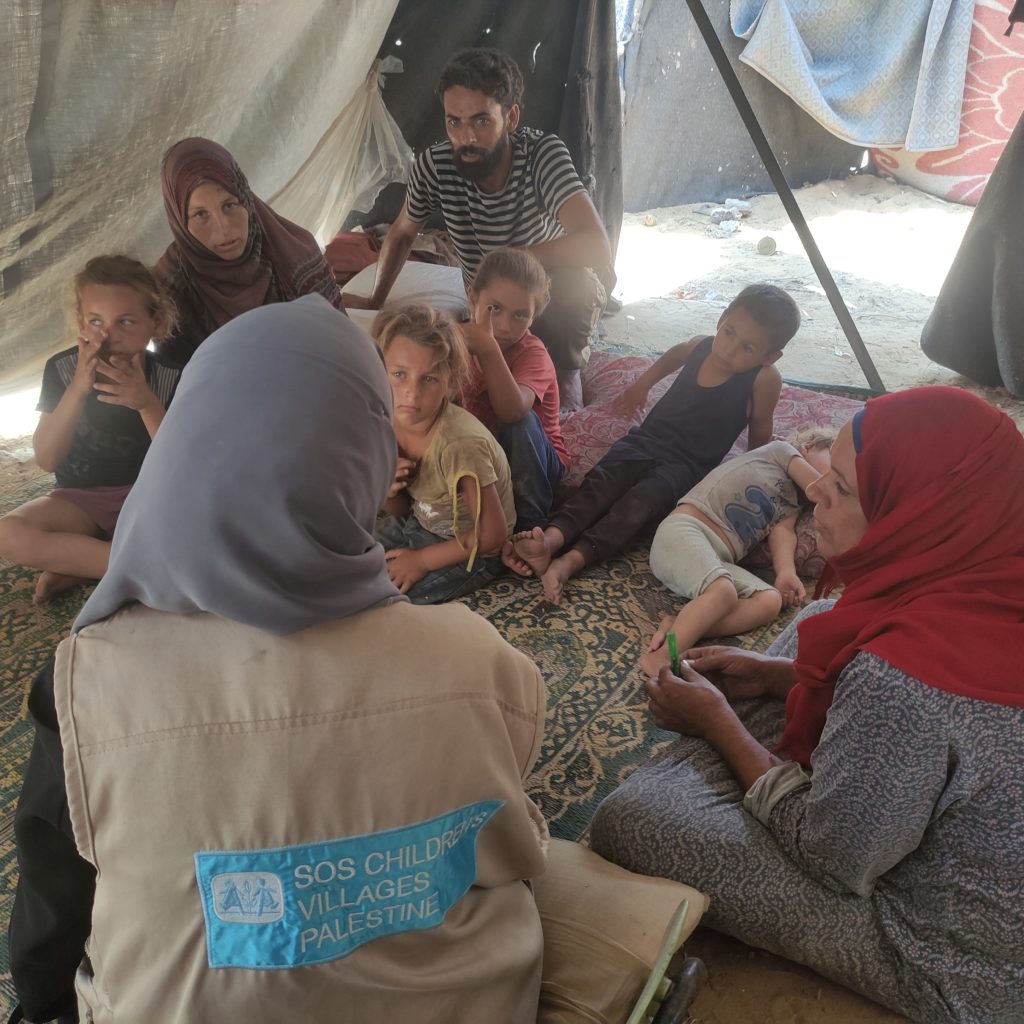
SOS Children’s Villages World has chosen to support a new humanitarian project implemented by its sister association, SOS in Palestine, for families in the Gaza Strip. Planned over one year, the project aims to reinforce the social protection network and improve the economic and mental well-being of these families. It seeks to ensure strengthened protection and psychosocial support for children, while improving the economic situation of households. A total of 1,200 people—200 households across the Gaza Strip—will be reached.
Multipurpose cash assistance will be provided to all participating families so they can cover essential needs, alongside the distribution of non-food items for the most vulnerable among them (90 families). In addition, family counselling sessions (for 125 families) will aim to reduce children’s feelings of isolation and anxiety, and awareness-raising sessions will be offered. These will address issues related to child protection and rights, gender equality, reporting mechanisms, and protection from sexual exploitation and abuse.
This project follows on from a humanitarian intervention carried out between June 2024 and July 2025 as part of the emergency response implemented in the Gaza Strip by our sister association, SOS Children’s Villages in Palestine. That initiative supported more than 4,180 children and adults in displacement camps through an integrated approach combining protection, financial assistance (for 330 households), psychosocial support (for 1,500 people), and recreational activities (for 2,500 children).